
Technology is evolving rapidly. Artificial intelligence is changing how software is developed, businesses are investing in digital solutions, and companies need developers who can understand more than just one part of an application.
For students, fresh graduates, and aspiring software engineers, this raises an important question: Is full stack development worth learning in 2026?
The short answer is yes, provided you learn the right skills and gain practical experience. Full stack development can open doors to different software engineering roles because it helps you understand how applications work, from the user interface to the server, database, and deployment process.
At Coding Tutor, we believe that becoming industry-ready requires more than completing a course. It requires building projects, solving real problems, collaborating with a team, and learning how software is developed in professional environments.
Let's explore the career scope of full stack development in 2026 and how beginners can prepare for it.
Who Is a Full Stack Developer?
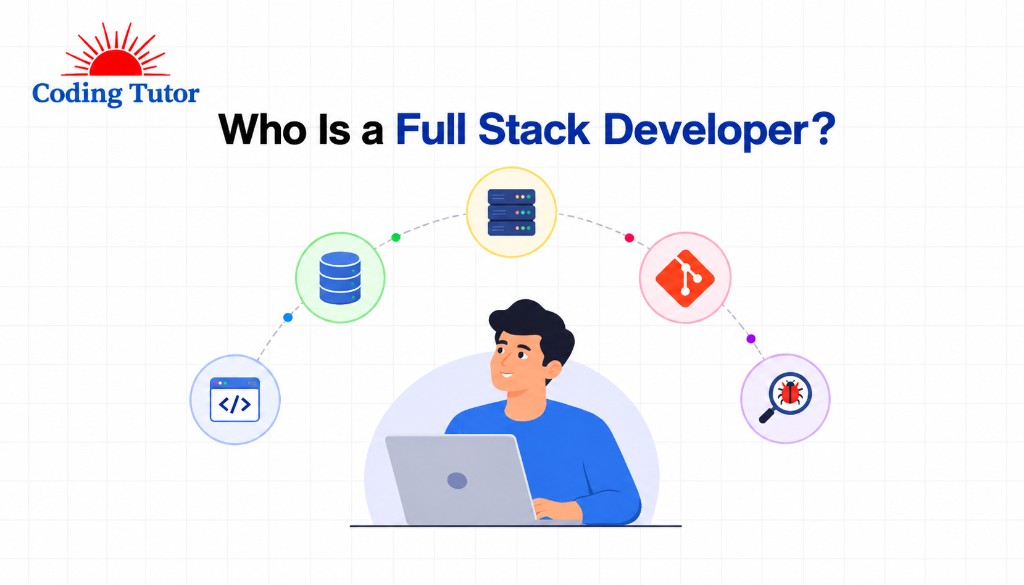
Have you ever wondered who builds the websites and applications we use every day? From online shopping platforms to banking applications and business management systems, there is a lot happening behind the screen. A full stack developer is a software professional who can work on both the frontend and backend of an application.
In simple terms, the frontend is what users see and interact with, while the backend manages the logic, data, and processes that make the application work. A full stack developer understands how these two parts connect to create a complete, functional application.
For example, imagine building an online shopping website. The frontend allows customers to browse products, add items to their cart, and place orders. The backend processes those orders, manages customer information, communicates with the database, and handles other essential operations. A full stack developer can contribute to both sides of this process.
Roles and Responsibilities of a Full Stack Developer at Coding Tutor
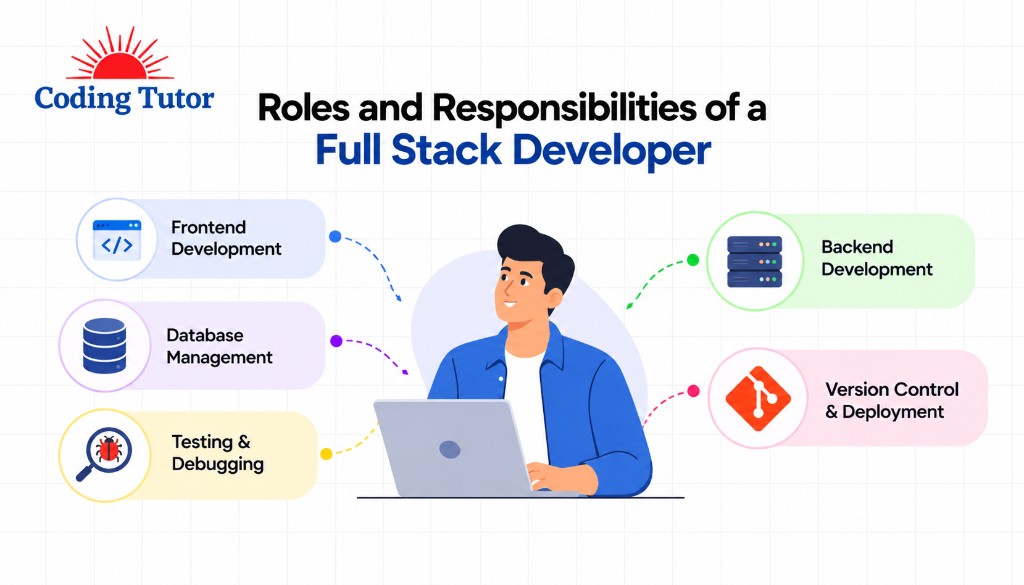
At Coding Tutor, we focus on helping aspiring software engineers understand full stack development through practical learning, , and industry-relevant technologies.
- Frontend Development: Build responsive, user-friendly interfaces using HTML, CSS, JavaScript, and React.
- Backend Development: Develop application logic, APIs, and server-side functionality using Java, Spring Boot, Python, Django, or Flask.
- Database Management: Store, manage, and retrieve data using MySQL, PostgreSQL, and MongoDB.
- Version Control & Collaboration: Manage code and collaborate with teams using Git, GitHub, Jira, and Azure DevOps.
- Testing & Debugging: Identify errors, test application features, and improve software quality.
What Is Full Stack Development, and Why Is It Important in 2026?
Full stack development is the process of building both the frontend and backend of a web application.
A full stack developer understands how users interact with an application, how the server processes requests, how data is stored, and how different components work together.
Frontend Development Skills for Beginners
Frontend development focuses on the part of an application users see and interact with. Common technologies include:
- HTML and CSS
- JavaScript
- React and other modern frontend frameworks
- Responsive web design and user experience fundamentals
Backend Development and Database Skills
Backend development handles application logic, APIs, authentication, and communication with databases.
Popular technologies and tools include:
- Java with Spring Boot
- Python with Django or Flask
- REST APIs and backend architecture
- SQL databases such as MySQL and PostgreSQL
- Git, testing, deployment, and debugging tools
Learning these technologies helps aspiring developers understand the complete software development lifecycle instead of focusing on isolated coding tasks.
Is Full Stack Development a Good Career in 2026?
Yes, full stack development can be a promising career choice for people who enjoy problem-solving, building applications, and learning new technologies.
Businesses need web applications, internal business tools, customer portals, e-commerce platforms, and software products. Full stack developers can contribute to multiple parts of these solutions.
However, career opportunities depend on your technical skills, project portfolio, communication, interview preparation, and ability to demonstrate what you can build. Learning full stack development does not automatically guarantee a job.
Full Stack Developer Job Opportunities for Freshers
After developing the necessary skills and practical experience, you can explore roles such as:
- Junior Full Stack Developer
- Java Developer
- Python Developer
- Frontend Developer
- Backend Developer
- Web Application Developer
- Software Engineer
Your first role will depend on your strengths and the requirements of individual employers. You do not need to master every technology at once. Start with a clear learning path and build your skills progressively.
Best IT Career Options in Hyderabad for Freshers
Hyderabad offers opportunities across software services, product development, cloud computing, enterprise applications, and technology consulting.
For graduates exploring IT jobs for engineering graduates in Hyderabad, full stack development is one path worth considering. Other options include Java development, Python development, cloud and DevOps engineering, software testing, cybersecurity, and AI-related roles.
The right choice depends on your interests, existing knowledge, and willingness to practise consistently.
If you are a B.Tech graduate evaluating different career paths, read our guide to Best IT Courses After BTech in 2026: The Smartest Way to Build a Successful Tech Career for more ideas on building job-relevant technical skills.
How AI Is Changing Full Stack Development in 2026
Artificial intelligence is changing the way developers write, test, debug, and maintain code. AI coding assistants can help developers understand unfamiliar code, generate suggestions, and identify potential issues.
But does AI mean beginners no longer need to learn programming?
Not at all. Developers still need to understand programming fundamentals, application architecture, security, databases, testing, and the reasoning behind technical decisions.
Full Stack Development with AI Skills
Learning full stack development alongside AI tools can help you become more adaptable.
Focus on developing these skills:
- Writing and debugging code independently
- Using AI coding assistants responsibly
- Integrating APIs into applications
- Understanding authentication and data security
- Building applications that solve practical problems
- Testing AI-generated code instead of blindly trusting it
The goal is not simply to generate code faster. It is to understand the code, evaluate its quality, and build reliable applications.
Java vs. Python Full Stack Development — Which Should You Learn?
Both Java and Python offer useful pathways into full stack development. Your choice should depend on your career interests, preferred learning style, and the kinds of applications you want to build.
Java Full Stack Development Career Path
Java full stack development commonly involves Java, Spring Boot, frontend technologies, databases, APIs, and software development tools.
It can be a suitable option for learners interested in enterprise applications, backend systems, and large-scale business software.
Explore our detailed guide: Java Full Stack with AI Training Program in Hyderabad.
Python Full Stack Development Career Path
Python full stack development can be a good choice for beginners interested in web applications, backend development, automation, and future opportunities involving AI.
A typical learning path includes Python fundamentals, Django or Flask, frontend development, databases, APIs, testing, and deployment.
Read more in our guides:
Neither language is universally better. Choose one, develop strong fundamentals, and build projects before trying to learn several technology stacks simultaneously.
How to Become a Full Stack Developer in 2026
If you are starting from scratch, follow a structured roadmap instead of jumping between random tutorials.
Step 1 — Learn Programming Fundamentals
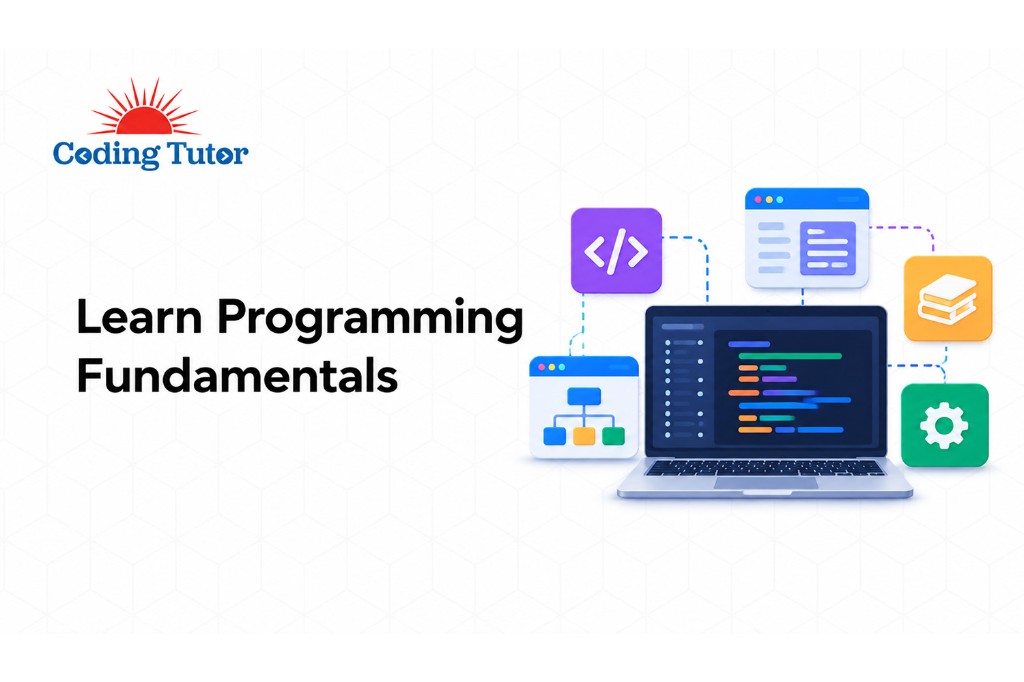
Choose Java or Python and practise variables, data types, conditions, loops, functions, object-oriented programming, and problem-solving.
Step 2 — Learn Frontend and Backend Development
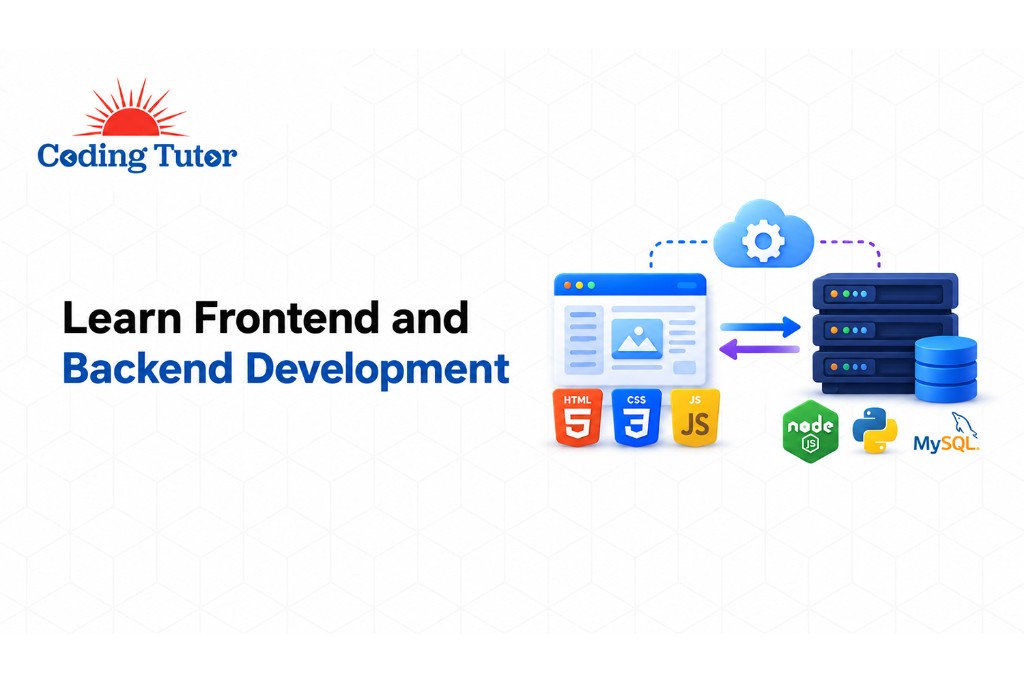
Build your frontend skills with HTML, CSS, and JavaScript. Then learn a backend framework that matches your chosen programming language.
Step 3 — Understand Databases, APIs, and Git
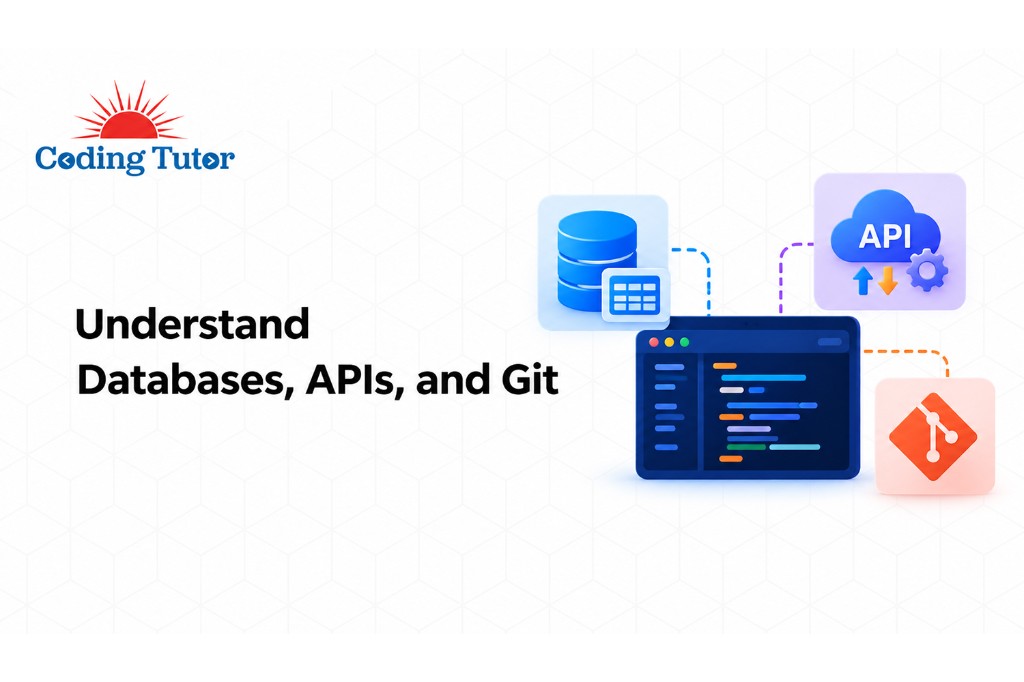
Learn how applications store and retrieve information, communicate through APIs, and manage code changes using version control.
Step 4 — Build Real-World Full Stack Projects
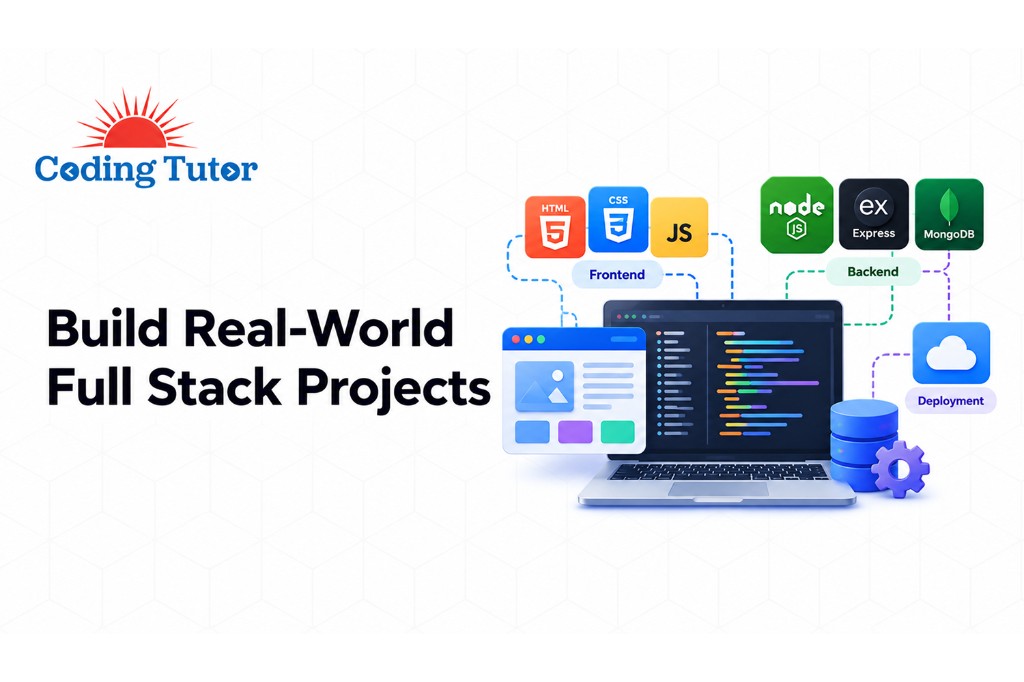
Start with a task manager, expense tracker, appointment booking application, or inventory management system.
As your confidence grows, add authentication, database integration, error handling, automated tests, and deployment.
Step 5 — Create a Portfolio and Prepare for Interviews
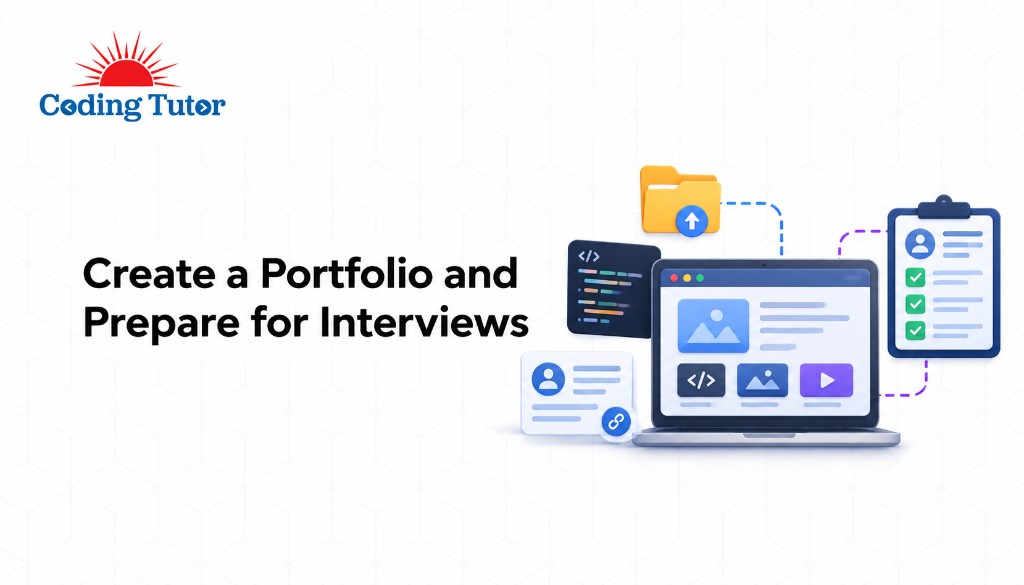
Publish suitable projects on GitHub, explain your technical decisions, practise coding problems, and prepare to discuss the applications you have built.
Employers want to understand not only what technologies you know but also how you approach problems and learn from mistakes.
Why Practical Experience Matters More Than Just Completing a Course
One common challenge for freshers is knowing programming concepts but struggling to apply them independently.
Watching tutorials can help you understand a topic, but building an application teaches you how to connect concepts, investigate errors, and make decisions when there is no step-by-step solution.
Practical learning should include:
- Project-based assignments
- Code reviews and debugging exercises
- Version control and collaborative development
- Agile workflows and task tracking
- Deployment and documentation
- Technical discussions and interview practice
At Coding Tutor, our focus is on practical software development, industry-relevant skills, and project-based learning. Explore our programs to understand the available learning pathways, or visit our official website to learn more about Coding Tutor.
You can also explore our blog library for additional technical guides and career resources.
Final Thoughts — Is Full-Stack Development Worth Learning in 2026?
Full stack development is worth considering in 2026 if you want to build a career around software engineering, web applications, and solving real-world problems.
But here is the important part: being job-ready is not about how many technologies you list on your resume. It is about what you can actually build, understand, and explain.
Start with one programming language. Strengthen your fundamentals. Learn frontend and backend development. Build projects, use AI tools thoughtfully, and practice explaining your work.
If you are a fresher planning your next career move, do not feel pressured to learn every new technology at once. Choose a clear learning path and make consistent progress.
At Coding Tutor, we believe practical learning and real project experience can help aspiring software professionals prepare for the challenges of the IT industry.
Learn. Build. Become Industry-Ready.